
THE LEADERS OF TOMORROW
ATHENA & TELEMACHUS ALUMNI
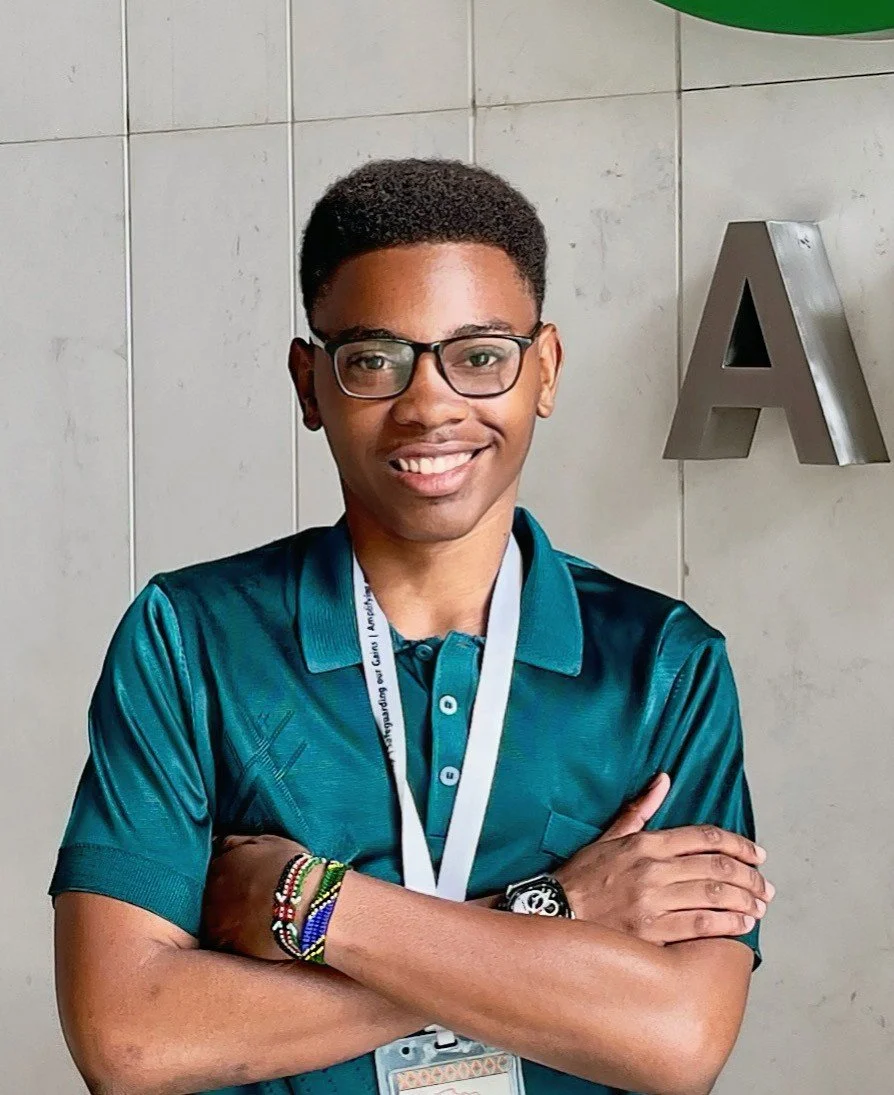
Azzan Mustafa Ndolo:“Growth Comes from Both Privilege and Struggle.”
AZZAN MUSTAFA NDOLO
Azzan Mustafa Ndolo grew up in Tanzania, where he witnessed how limited access to opportunities and quality education can restrict young people from reaching their full potential. Over the past four years, he has mobilised communities, coordinated campaigns, and supported initiatives aimed at helping youth learn, grow, and lead. He is currently pursuing a Diploma in Accountancy at the Tanzania Institute of Accountancy while actively leading youth-focused projects.
Q: Tell us a few things about you! Your background, your childhood and early beginnings!
My name is Azzan Mustafa, from Dar es Salaam, Tanzania. I would describe my story as one shaped by resilience, multicultural exposure, responsibility, and continuous personal growth.
I grew up in a middle-class household raised by a single mother. Being the first born boy on my mother’s side and carrying the family name meant there were always expectations on me from an early age. I naturally became someone who wanted to make people proud, and for a long time I found myself seeking approval by being helpful and dependable. That experience taught me responsibility early, but also helped me understand myself better as I grew.
I also grew up in a very multicultural environment, interacting with people from African, Arab, Indian, and Western backgrounds through school and social life. That really shaped me to be open-minded and adaptable. I didn’t personally face racism, but I saw close friends experience discrimination, which helped me develop empathy and a deeper awareness of how differently people experience life.
Becoming older, I started realizing that life is not equal for everyone. Watching my mother work hard made me understand that I needed to be intentional and independent about my future. That pushed me to take education, communication, and personal development more seriously, and to start thinking about how to create opportunities instead of waiting for them.
Like many young people, I also went through moments of confusion and self-doubt. But those experiences helped me grow emotionally and taught me that development is not a straight path it comes through reflection and challenges.
Over time, I became more interested in leadership, youth empowerment, and community work. I’ve been drawn to spaces where young people can be exposed to opportunities, mentorship, and guidance, because I’ve seen how even small exposure can change someone’s direction in life. Another important part of my journey has been learning to surround myself with smart, driven people, and intentionally building meaningful relationships where I can learn, exchange ideas, and explore things I don’t yet know. That has really shaped how I grow and think.
Today, I see myself as someone still learning and evolving. My background has taught me resilience, my environment taught me adaptability, and my experiences taught me empathy and independence. I’m still figuring things out, but I’m very intentional about growing, learning from people, and creating impact where I can.
At the core of my story is the belief that growth comes from both privilege and struggle, and from continuously learning from the people and world around me.
Q: What are some of the key challenges in your society currently?
In my view, some key challenges in my society and across Africa today are mainly around access, inequality, and awareness of opportunities.
First is limited access to opportunities and information. Many opportunities exist in education, jobs, and programmes, but a large number of young people are simply not aware of them or don’t know how to access them, so only a small group benefits.
Second is quality education and skills mismatch. While education access has improved, many systems still don’t fully equip young people with practical and digital skills needed in today’s economy.
Another major issue is youth unemployment and underemployment, where many young people either cannot find jobs or work in roles that don’t match their education or potential.
Poverty and inequality also remain significant, limiting access to education, technology, and long-term opportunities for many communities.
There is also the digital divide, where urban areas are more connected while rural areas still lack access to reliable internet and technology. Finally, there is a gap in exposure and mentorship, where many young people have talent but lack guidance, role models, or awareness of what is possible for them.
Q: Share with us some of the hurdles that you had to overcome in your life so far? How did you handle them?
Some of the main hurdles I’ve faced so far have been around balancing my health, personal life, and my goals and opportunities.
It’s not something I usually talk about in detail, but managing my health while trying to stay active in school, social spaces, and opportunities has sometimes been challenging. At times, the environments or demands around me made it difficult to maintain that balance while still trying to achieve my goals.
Over time, I’ve learned how to handle this better. I’ve become more intentional about taking care of my health, recognizing early when something is not working, and knowing when to pause and reflect instead of pushing too hard.
I’ve also learned to be more selective with opportunities focusing on those that allow me to grow and contribute without negatively affecting my well-being. That balance has become very important for me.
Overall, these experiences have taught me self awareness, discipline, and the importance of making sustainable choices in both my personal life and my ambitions.
Q: Why is the role of a mentor important for you?
The role of a mentor is very important for me because, growing up and even up to this point in my life, I’ve had to learn and figure out many things on my own.
My mother has always been supportive, but she was also busy working and providing for the family, so I often had to become independent early finding opportunities, side work, and ways to support myself while still focusing on my goals.
Because of that, I’ve learned a lot through experience, but I also realized that having guidance would have made some of the journey clearer and more focused.
Right now, I’m at a stage where I’m looking for a mentor who can guide me in areas that align with my career interests, help me identify the right opportunities, and support my growth both professionally and personally.
For me, a mentor is not just someone who gives advice, but someone who helps you see what you cannot yet see, and supports you in growing with direction rather than trial and error.
Q: Do you have a lesson that life has taught you and you would like to share?
At this stage of my life, I do not yet have a specific lesson I feel ready to share.
Q: Name a project, a foundation or a person in your country that you think is doing great work in helping improve other people's lives!
For me, one initiative I truly believe is making an impact is my own youth-led organisation, Mwanga wa Kesho.
It started back in high school as a student led initiative focused on empowering young people through mentorship, guidance, and exposure to opportunities. Even though we are still growing and building a stronger structure, we continue to push forward despite challenges like limited funding, resources, and exposure. What keeps us going is the passion behind the work. We try to bring mentors, create learning spaces, and support students in whatever way we can, even when conditions are not perfect.
For me, Mwanga wa Kesho represents what youth-led impact looks like at its early stage driven more by purpose than resources. I also believe that with time, structure, and support, it has the potential to create even greater impact in the coming years.
Q: What are some of the challenges that women in your country face and what efforts are being made towards gender equality?
In my country, women still face several challenges related to inequality, economic opportunity, and social protection. One major challenge is limited access to equal opportunities, especially in employment and economic empowerment. From my own experience, I’ve seen many women, including single mothers, taking on multiple roles to support their families, often in informal or unstable work, mainly because they lack sufficient support from partners or strong safety nets.
Another challenge is social and structural inequality, where some women still face issues like early marriages, gender-based violence, and in some cases, sexual abuse. These issues not only affect their rights but also their ability to fully participate in education and economic life.
However, there are also important efforts being made. Many NGOs and community organisations are working to empower women through vocational training, education, entrepreneurship programmes, and awareness campaigns on gender equality. These initiatives are helping women gain skills and become more economically independent.
At the same time, I believe there is still a need for stronger systems that not only empower women but also ensure accountability, especially in cases of gender-based violence and neglect of responsibility from men, so that protection and justice are part of the solution.
Overall, while progress is being made, there is still a significant gap, and continued effort is needed to ensure women have equal access to opportunities, safety, and long-term empowerment.
Q: Share with us a motto you live by.
I don’t have a fixed personal motto yet, but there is a quote from my faith that I really live by: “With hardship comes ease.”
Q: If you had all the money needed to launch the project of your dreams, can you describe what you would do?
If I had all the funding needed, I would focus on building a startup that connects young Africans to mentors, skills, and real opportunities.
Right now, I’m already working on an idea with a friend that aims to provide access to mentorship, opportunities, digital learning platforms, and pathways to remote jobs, internships, and entrepreneurship. The goal is to bridge the gap between talent and opportunity.
Beyond just skills, I want to build an ecosystem where young Africans can grow in global and multicultural environments, collaborate internationally, and access opportunities that allow them to express who they are, their cultures, values, and aspirations.
Ultimately, it’s about creating a space where young people are not just job seekers, but equipped, connected, and confident enough to thrive globally.
Q: How is technology utilised for social impact in your country? For example are there mobile apps that support gender equality, inclusion, understanding of cultures?
In my country, technology is increasingly being used for social impact, especially through mobile platforms that support education, awareness, and youth engagement.
One example is the AU–EU Youth Cooperation App, which is designed to connect young people across Africa and Europe, share opportunities, and promote collaboration in areas like education, skills development, and civic engagement. I also participated in engaging with this platform, which shows how digital tools are being used to bridge global opportunities for youth.
Beyond that, there are also various digital and social media platforms being used for education, health awareness, and even mental health support, helping young people access information and services more easily.
Overall, while these tools are still developing and not yet widely accessed by everyone, they represent a growing shift where technology is helping improve inclusion, access to opportunities, and awareness across different social issues.
Q: Anything else that you may wish to add?
At the moment, I’m mainly interested in mentorship, but also in additional support that can strengthen the experience. This includes access to resources and opportunities that can support personal and professional growth, such as learning materials, skills development programmes, and exposure to real-world experiences. I’m also interested in placements or internship opportunities, where young people can apply what they learn in practical settings.
In addition, things like funding opportunities for youth-led ideas, as well as interactive webinars or dialogue sessions, would be very valuable. I prefer spaces where there is active engagement, sharing of ideas, and real conversations rather than just passive learning.
Overall, anything that combines mentorship with practical tools, opportunities, and real exposure would be very impactful.