
THE LEADERS OF TOMORROW
ATHENA & TELEMACHUS ALUMNI
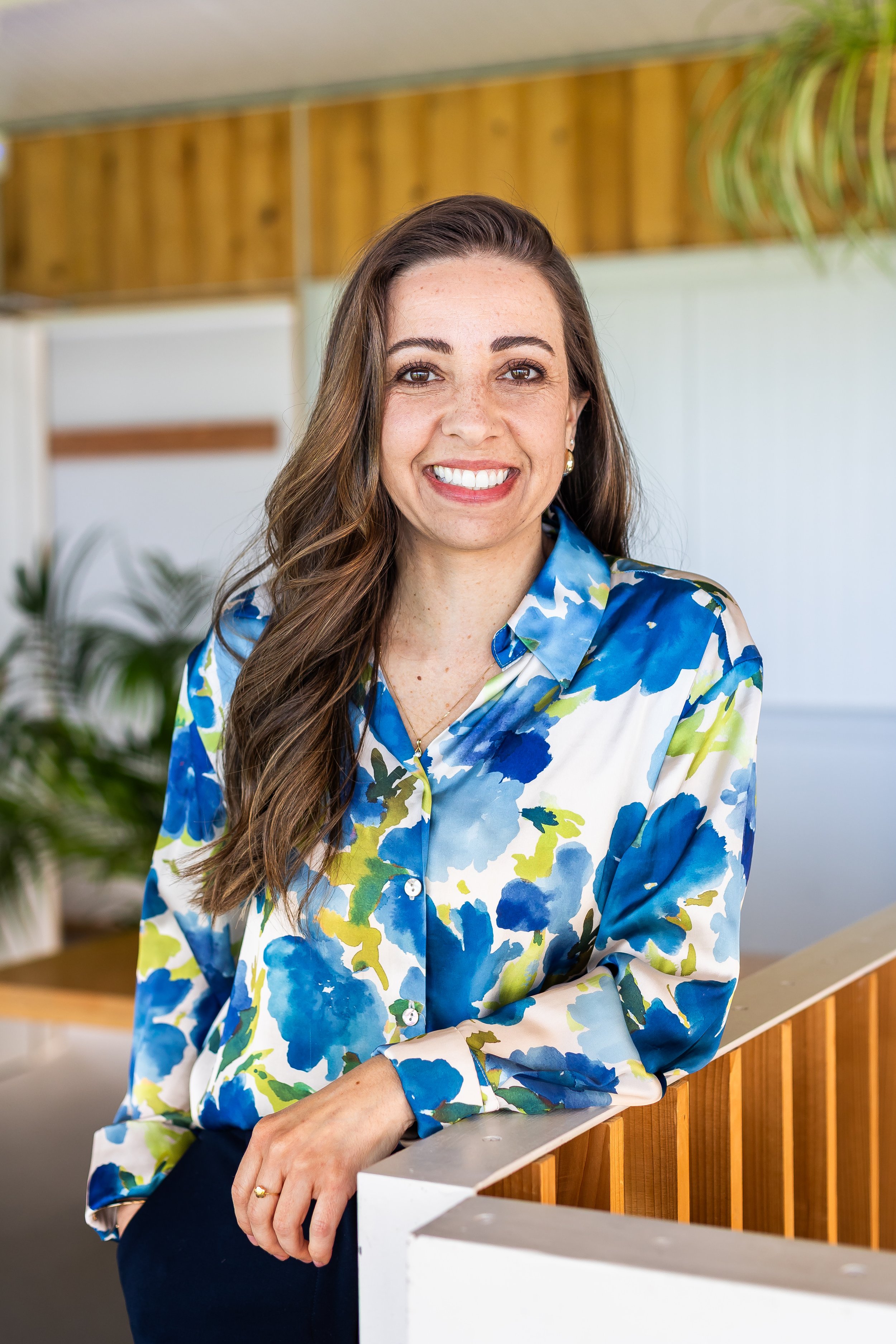
Marcia Pregal:“Hurdles are Part of Developing and Growing.”
MARCIA PREGAL
Marcia was born in Brazil to a Portuguese father and a Brazilian mother and grew up in São Paulo, where she was immersed in multicultural values of discipline, respect, and ethics while attending a German school. Her career spans more than 20 years across Brazil, Australia, and the United Kingdom, with professional experience at global organisations such as BP, Herman Miller, and Buro Happold. Today, Marcia combines this extensive background with her passion for financial empowerment through an inclusive money coaching practice grounded in quantum leadership principles.
Q: Tell us a few things about you! Your background, your childhood and early beginnings!
I was born and raised in São Paulo, Brazil, to a Portuguese father and a Brazilian mother. I have a younger sister and brother. We are a very close family. Being raised in a fast-paced multicultural mega city exposed to me challenges as well as incredible opportunities and I feel fortunate to have been brought up in that environment. At 23 I moved to Australia for one year with a goal to speak English fluently, gain international professional experience and return to Brazil bringing new ideas, and ahead in the professional career field. That then ended up leading me to spend 3 months in the UK which unexpectedly turned so far 21 years abroad.
Q: What are some of the key challenges in your society currently?
In the UK - the rise in cost of living in general as well as reduced efficiency in public healthcare access. In Brazil, safety concerns increased lately, political divide in society and corruption is still an issue.
Q: Share with us some of the hurdles that you had to overcome in your life so far? How did you handle them?
I approach them as inevitable and part of developing and growing. In any environment, personal or professional, I find it very difficult to deal with dishonesty, and I know I immediately want to remove myself from that space. Severe anxiety was a big hurdle and stopped me doing a few things in life for many years. However, I never stopped researching and trying to solve it. I found the answer in hypnotherapy and life is amazing now.
Q: Why is the role of a mentor important for you?
I find it hugely beneficial and as a mentee with the Global Thinkers Forum at a pivotal moment in my career, accountability is important. A mentor helps me see and support what I am already capable of, challenge my thinking and in my case, my mentor has provided me with answers I had searched for a long time. This is invaluable.
Q: Do you have a lesson that life has taught you and you would like to share?
To know who and what really matters to you. What are your values, your non-negotiables, and remember those during difficult decisions.
Q: Name a project, a foundation or a person in your country that you think is doing great work in helping improve other people's lives!
We are fortunate to have some incredible work being done by charities and I would mention Dorothy House in Bath for supporting end of life care not only for their residents, but the families too. In Brazil, AMA ( Associação de Amigos do Autista) - founded by parents of autistic children initially to fight for the rights and inclusion of autistic people. Their hard work nowadays creates a free and safe space for free education and access to multidisciplinary therapies.
Q: What are some of the challenges that women in your country face and what efforts are being made towards gender equality?
Sadly, in Brazil one of the biggest issues at the moment is the rise in femicide. Things are even more challenging for Black and Indigenous women, who face racial inequality on top of everything else.
Women are also significantly underrepresented in government, holding very few political positions compared to many other countries, which makes it harder to drive the changes that are truly needed. In the workplace, Brazil is still behind the UK when it comes to things like part time working options, maternity benefits and equal pay, which makes it harder for women to thrive professionally.
In the UK, the cost of childcare, the cost of living, especially for single mothers, and in some cases domestic violence, are the biggest issues.
However, there are lots of positive efforts happening in both countries. More women are in education than ever before, and there are great programmes specifically focused on supporting and funding women to help close the gap. Women's groups, open conversations and social media are doing a lot to empower women to speak up and not accept the cultural and historical patriarchy that has held them back for so long.
Q: Share with us a motto you live by.
'Breath. This too shall pass' - for when low or challenging moments arise.
'Know your numbers' - understand your financial situation, plan, always be prepared.
Q: If you had all the money needed to launch the project of your dreams, can you describe what you would do?
Money is essential to live, and yet there is so much stigma, shame and cultural baggage around it. For people with special needs, neurodivergent individuals, or those from poorer backgrounds, that barrier is even higher. I want to change that.
The platform (app and Web dashboard) I would build brings your entire financial life into one place — current accounts, savings, pensions, investments, debt and mortgages — all connected through Open Banking, with a clear and simple visual overview that makes your financial situation easy to understand at a glance. You could model retirement scenarios, set goals, plan for the future — all in one place, without needing to be a financial expert. There would be a disclaimer stating that this does not constitute financial advice.
At the heart of it is an AI money coach that learns your financial behaviour over time, automatically identifies and categorises your spending no matter where in the world it happens, and gently supports you in building a healthier relationship with money. Crucially, all personal data is stripped out before the AI ever gets involved, so privacy and security are built in from the start — not added as an afterthought. But what makes this truly different is the commitment to accessibility. I want to build this with and for neurodivergent people and those with visual impairments from day one — not as a feature added later, but as a core design principle. Access to regulated financial advice is mostly inaccessible to those that really need it, so this tool would help decrease the lack of support or accessibility to financial guidance.
Q: How is technology utilised for social impact in your country? For example are there mobile apps that support gender equality, inclusion, understanding of cultures?
In Brazil, nowadays there are more apps and platforms as well as grassroots movements using social media as a positive tool for social impact. It is especially impactful in more remote and underserved communities, where technology has helped improve access to education and healthcare. Financially, fintech and social media financial education are bringing financial awareness and inclusion, which to me is hugely important.
In the UK, there are also many digital initiatives including aimed at supporting refugees and migrants in understanding their rights and accessing services, helping with cultural integration as well as access to therapy, healthcare. I would like to see more of financial education included in refugees and immigrants' centres.
AI is starting to play an important part in spreading knowledge and support. As with any information, it should be carefully researched and checked, but brings huge inclusivity especially in supporting new ways of studying and working for people with special needs.